People talk about so-called progressive teaching methods where it is more self-directed, exploratory, or inquiry based, but there is nothing new about this. Scholars have been championing this same idea for over 200 years, back to the 18th Century. If it was really more effective than traditional teaching, it would have already replaced traditional teaching a long time ago. The idea is that you turn the kids loose, and they would discover some principle of physics on their own, and they would have the joy of discovery, a sense of accomplishment, capture the feeling of the famous scientists who originally discovered it, and they would remember it better because they would remember their own personal experience. The problem with the idea is that the vast majority of kids are NOT going to discover the physics principle on their own. These proposals run the spectrum in terms of how much freedom versus direction you give the kids. It only works if you tell the kids ahead of time what the truth is, what exactly it is that you want them to “discover”. Also, it is only beneficial for the top students that already have a natural curiosity and ability to think of innovative solutions. Also, it should be used as a supplement but not a replacement for traditional science instruction. For the vast majority of kids, if you tell them what you want them to learn, they may or may not learn it, but if you don’t even tell them what you want them to learn, they are definitely not going to learn it.
I have been to Science World which is a famous children’s science museum in Vancouver. The most popular exhibit is an exhibit with flowing water. If you read the signs, it teaches real physics principles, that should be understandable by elementary school kids, talking about hydrodynamics, and the model demonstrates dams, locks, water wheels, fountains, Bernoulli’s Principle, waves, etc. However, none of the kids bother to read the signs. The huge group of little kids always gathered around the exhibit, laughing hysterically, are not learning anything. Instead they are having a grand old time splashing in the water. They think that this is a pool party. They act the same as if they were frolicking in a swimming pool waving around foam noodles. I do not blame the museum. It is a well designed exhibit. It would be educational if someone bothered to read the signs, and actually wanted to learn about the physics being demonstrated.
I have been to many science outreach events for kids in Vancouver, such as Science Rendezvous or the Faraday Show. I have noticed that there is always a large number of kids in the audience, but only small percentage are really interested. There is always a group of 4–6 boys, 9–12 years old, sitting in the front row, who may or may not know each other. Unlike the other kids, they are not sitting with their parents, who are presumably somewhere else in the room. Unlike the other kids, they are very talkative, constantly chatting with each other, and shouting answers or comments to whoever is putting on demonstrations. Having gone to so many previous similar events, they recognize demonstrations that they have seen many times before. For example, as soon as they see a pickle, they start talking about the “glowing pickle”. They dominate any audience participation that is part of the event. They represent a specific personality type which is a small percentage of kids their age. My own personal experience is that I have never personally witnessed a girl with this personality type. Girls of the same age are afraid to speak because they are afraid of being wrong. The boys are obviously not afraid of being wrong since often their answers or comments are spectacularly wrong but that’s ok.
By far the most difficult audience is adults without any scientific background. It is much easier to give a physics public outreach event for kids than it is for adults who have no background in science or engineering. There are many ways in which kids are more similar to scientists than adults who are not scientists, or scientists are more similar to kids than to adults who are not scientists.
1. Curiosity — Kids have a natural curiosity about the natural world around them, seeing something and wondering why. Scientists retain that same feeling for the rest of their life, but the vast majority of people lose that in childhood.
2. Willing to Accept Things That Are Counter Intuitive — There are a lot of things in physics that are counter intuitive. Physicists go through a long process of theory and experiment than leads them to accept their conclusions even if the conclusions might seem counter intuitive. Physicists accept things that are counter intuitive. Kids are also much more willing to believe or accept something that is counter intuitive. They have flexibility in their minds that makes them open to radical ideas. Adults who are not scientists, are much more entrenched in their way of thinking, clinging to their preconceived notions, unwilling to believe something that contradicts their personal experience in their daily lives.
3. Being in a Classroom — Kids are obviously used to being in a classroom since they go to school five days a week. They are used to be in “learning mode” where they are there for the purpose of learning. Most physicists are also physics professors and are therefore also used to be in the classroom. Aside from having been a student for a long time, they are sort of like a student, after they get a PhD, and for the rest of their life. They go to physics lectures and physics conferences where they are sitting in the audience for the purpose of learning physics. It’s not that different than being a student. Scientists are also used to be in “learning mode”, and they assume that life long learning is a given. That is not the point of view of the vast majority of adults who are not scientists. They assume that going to school is for kids, and that continuing this “child like” stage of your life for to long should be a source of shame.
4. Mathematical Knowledge — Kids reach an age where their skill in math surpasses the majority of adults who are not scientists or engineers. Most kids in 7th grade can do a 7th grade math homework problem. Most adults who are not scientists or engineers can not do a 7th grade math homework problem. If they could have done it when they were in the 7th grade, they have long since forgotten how to do it. The kids can still do it because they are still doing it in school or have done it recently. If you told the average adult who is not a scientist or engineer to add two fractions with different denominators, they would have no clue how to proceed.
This last point gets to another point. Most physicists do not realize how ignorant the general public is about science. Their shocking ignorance is far more profound than you realize it is. Very basic concepts in science that scientists learned when they were kids are unknown to the vast majority of the general public without a background in science or engineering. Scientists do not realize that the public does not know these things since they are so basic from the point of view of scientists. It is not merely that the general public has a shocking lack of scientific knowledge or mathematical ability, although that is certainly true, it is that, at a fundamental subconscious level, their whole way of thinking is wrong. At a subconscious level, they are making assumptions that they do not realize that they are making, and these assumptions are infinitely wrong. If a member of the general public went to a public physics lecture, they would think that they understood it when they are totally misunderstanding it because they are making assumptions that they do not realize that they are making, and these assumptions are infinitely wrong. Let’s say a physicist is giving a public physics lecture to adults who are not scientists or engineers. The physicist does not realize how badly the audience is misunderstanding it. The audience also does not realize how badly they are misunderstanding it.
Just to give an example, the members of the public do not understand something as basic as reference frames. The ancient Greeks understood reference frames but the average adult who is not a scientist does not. From the point of view of scientists, who understood reference frames when they were kids, this is so basic and elementary, they could not imagine someone not knowing it. In order to state the velocity of something, you have to specify a reference frame. Obviously, everything is motionless in its own reference frame. Yet the public thinks it’s meaningful to ask how fast something is “really” moving. People say they do not believe in time travel, not because of causality or the grandfather paradox, but because “the Earth is not in the same place that it was one day ago”.
Here I wrote an article about the public’s misunderstanding of physics.
One time, I went to a public physics lecture about neutrinos. There was a man in the audience whose take away from the lecture was that there was no such thing as global warming. It never crossed the mind of the physicist giving the lecture that anyone would misunderstand what he said in that way. How did this guy reach that outlandish conclusion? I was able to reconstruct the following chain of reasoning inside the guy’s head.
When a member of the general public without a scientific background attends a physics lecture, even if it is intended for a popular audience, they can only understand about half of the words used, and from that, try to guess what was meant. It is similar to if you took a foreign language in high school, and then, with only that limited partial understanding, you went to that country, and tried to understand what people were saying with only your limited vocabulary. Not surprisingly in a lecture about neutrinos, the physicist mentioned the “Solar Neutrino Problem” and “neutrino oscillation”. This member of public heard the word “solar” and the word “oscillation”, and concluded from that, that the Sun goes through cycles. After the talk, he raised his hand, and asked a question, where he started by saying he remembered reading a newspaper article about the speaker’s work, and it was very obvious that he had never read any article about the speaker’s work, and the newspaper article that he could not remember was actually referring to the 11 year cycle of sunspots and solar flares, which has nothing to do with neutrinos, but that’s how I know the guy picked the words “solar” and “oscillation” from the talk. He did not stop there. If you told a member of the general public that the Sun goes through cycles, they would assume that meant that the light and heat coming out of the Sun goes up and down over time. This guy in the audience suddenly had a Eureka moment, where a light bulb appeared over his head, where he thought “Hey! Maybe that’s what global warming is! Maybe it’s just the Sun going through it’s cycle! Maybe it’s not caused by humans after all!” Then after the talk, he asked the speaker about this, and the physicist was flummoxed by the question because it was a talk about neutrinos, and he never imagined that someone would misunderstand what he said that badly.
In addition to that, many people are anti-science while believing that they are pro-science. Republican anti-science is well documented. I wrote the following article about Democrat anti-science.
Democrat Anti-Science
Other people here only focus on Republican anti-science and ignore Democrat anti-science such as Democrats who believe…
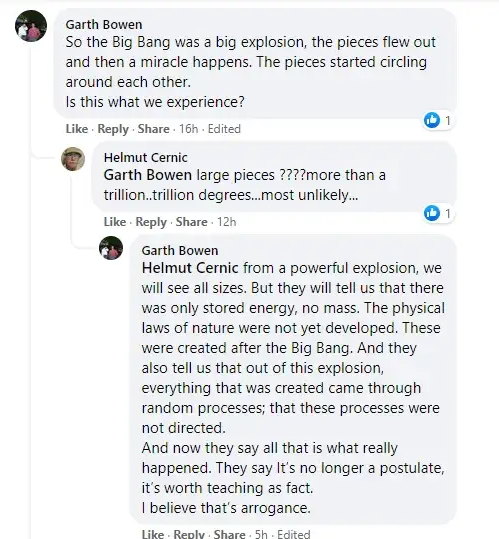
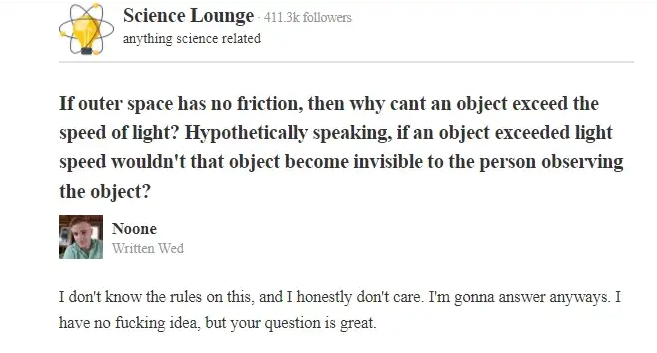
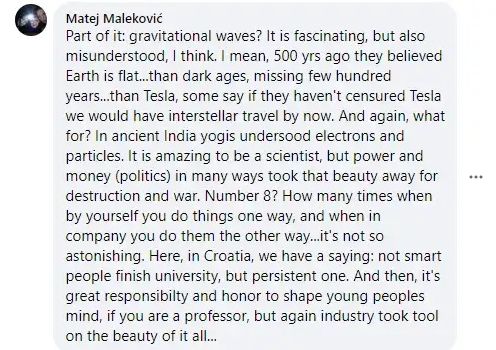
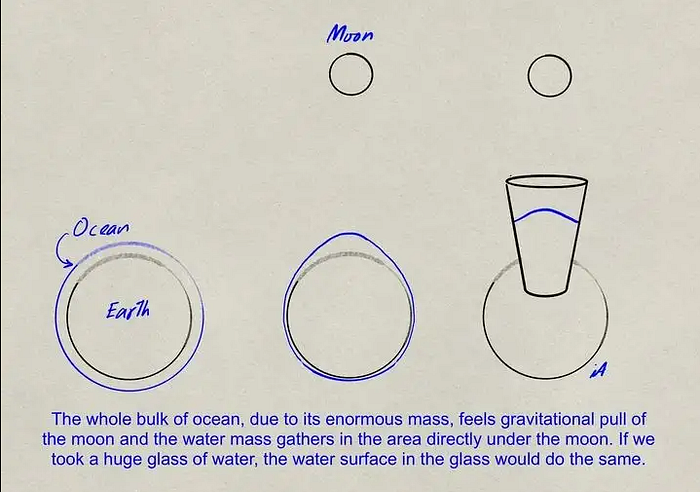
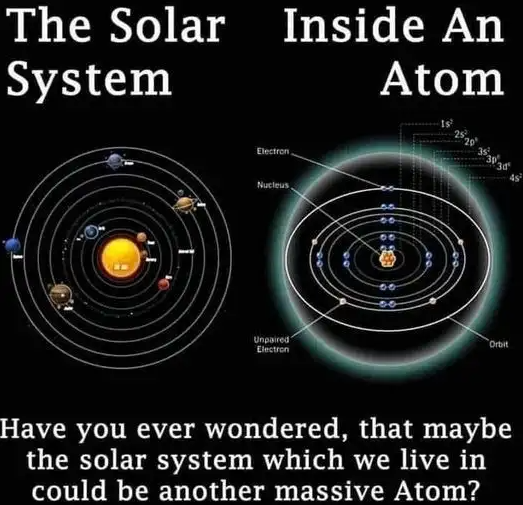
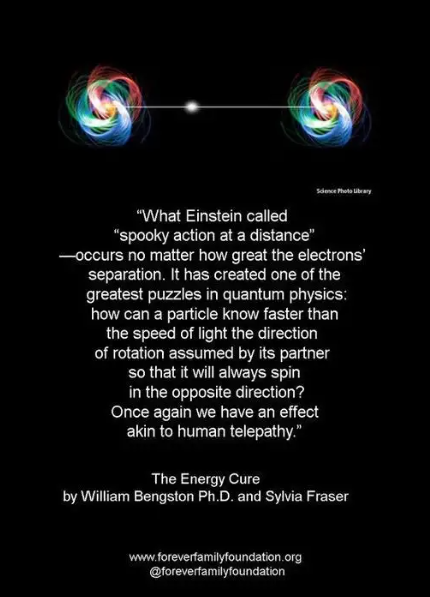
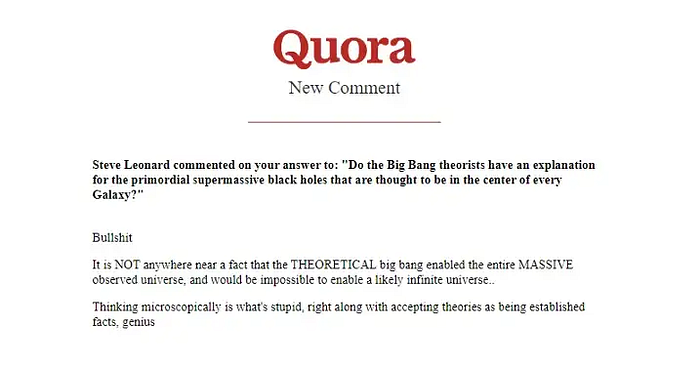
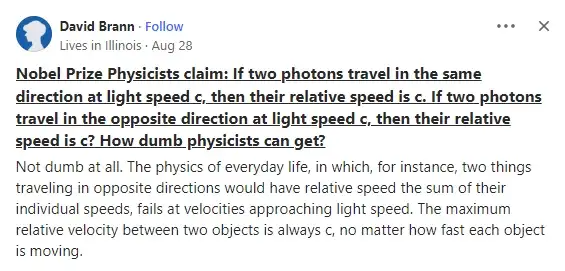
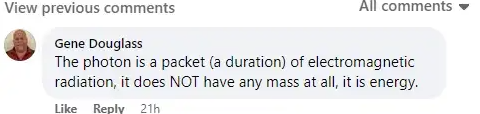
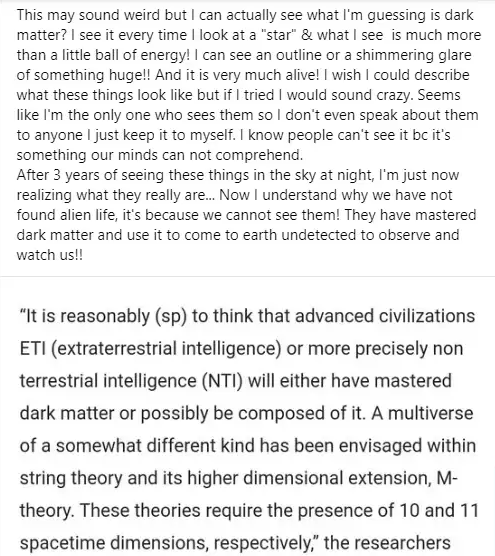
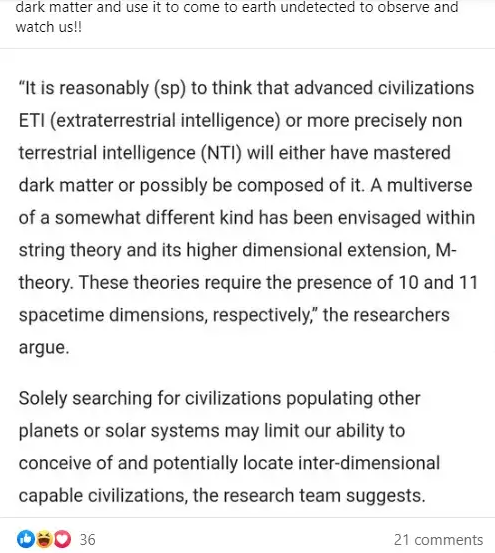
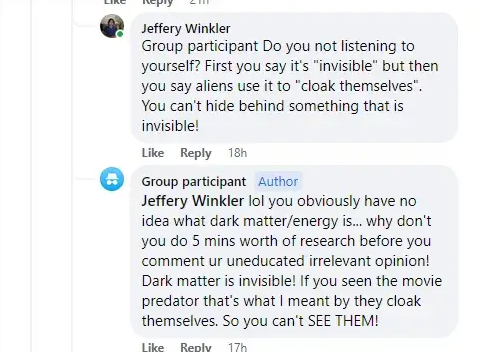
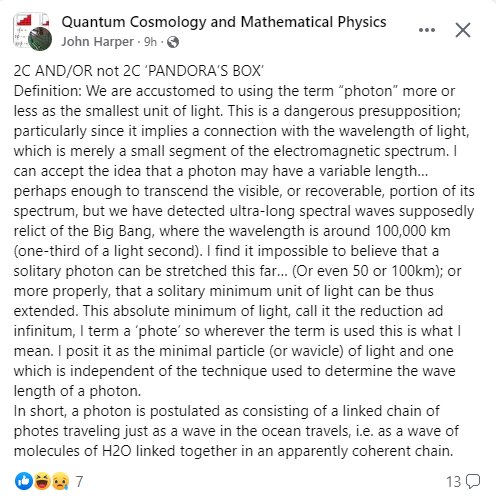
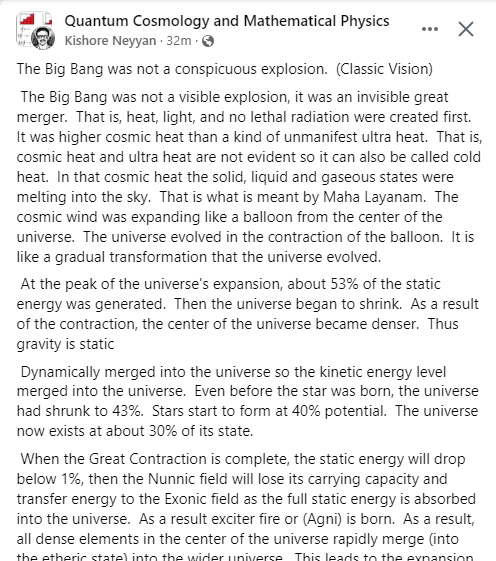
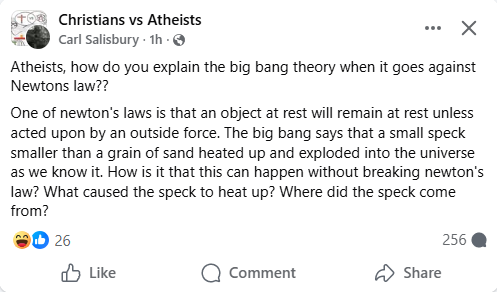
The average person’s misunderstanding of physics is much worse than the average physicist realizes that it is. I collected the following screen shots off the Internet illustrating the average person’s misunderstanding of physics.
Press enter or click to view image in full size
Press enter or click to view image in full size



Leave a comment